You have just finished assembling a batch of printed circuit boards. Each board contains microprocessors and CMOS ICs worth hundreds of dollars. You pack them in foam cushions, seal the box, and ship them to your customer.
When the box arrives, some boards do not work. Others pass initial testing but fail weeks later in the field. The cause? Electrostatic discharge (ESD)—a silent, invisible threat that standard packaging materials often fail to address.
This is not a hypothetical scenario. Research indicates that electronics damage rates average three to seven percent of shipments due to inadequate protection, creating costly returns and warranty claims that can reach hundreds of euros per incident. Transport-related damage accounts for 8% to 15% of total defect rates, with ESD damage, moisture ingress, and physical impact being the three leading causes.
This guide compares bubble wrap and foam packaging for electronics shipping across the dimensions that actually matter: ESD protection, physical impact resistance, cost efficiency, and sustainability. By the end, you will have a clear framework for choosing the right material for your specific electronic components.
Understanding the ESD Threat in Electronics Shipping
Before comparing packaging materials, it is essential to understand what you are protecting against. Electrostatic discharge occurs when a static charge suddenly transfers between objects. For electronics, the damage can be catastrophic.
The Invisible Risk
ESD can occur with as little as 100 volts—far below the 3,000 volts humans typically feel. This discharge can instantly destroy semiconductor components or cause latent damage that leads to premature failure weeks or months later. Dry shipping environments, especially during winter months, significantly increase ESD risk.
Industry Standards for ESD Protection
The electronics industry has established clear standards for ESD protective packaging. The ANSI/ESD S541-2026 standard (Packaging Materials For the Protection of Electrostatic Discharge Susceptible Items) defines the packaging properties needed to protect ESD-susceptible electronic items through all phases of production, transport, and storage.
Two global standards govern ESD packaging materials: ANSI/ESD S541-2019 and IEC 61340-5-3-2022. The IEC 61340-5-3:2022 standard defines the ESD protective packaging properties required to protect ESD sensitive devices through all phases of production, rework and maintenance, transport and storage.
Key Packaging Requirements
According to ANSI/ESD S20.20, packaging used within an ESD Protected Area (EPA) must be:
-
Low charge generation
-
Dissipative or conductive materials for intimate contact
For transportation outside an EPA, packaging must also provide low charge generation and dissipative properties.
Understanding these standards is the first step. The next question is: which packaging materials actually meet these requirements?
Bubble Wrap for Electronics Shipping: What You Need to Know
Not all bubble wrap is created equal. Standard bubble wrap—the kind used for general shipping—offers no ESD protection and can actually generate static charges that damage sensitive components.
Standard Bubble Wrap: The Risk
Standard bubble wrap is made from polyethylene, which is an excellent insulator. This is precisely the problem for electronics. Insulating materials allow static charges to build up and remain on surfaces. When a charged bubble wrap touches an electronic component, the sudden discharge can fry sensitive circuits.
For electronics shipping, standard bubble wrap should never be used in direct contact with components.
Anti-Static Bubble Film: The Solution
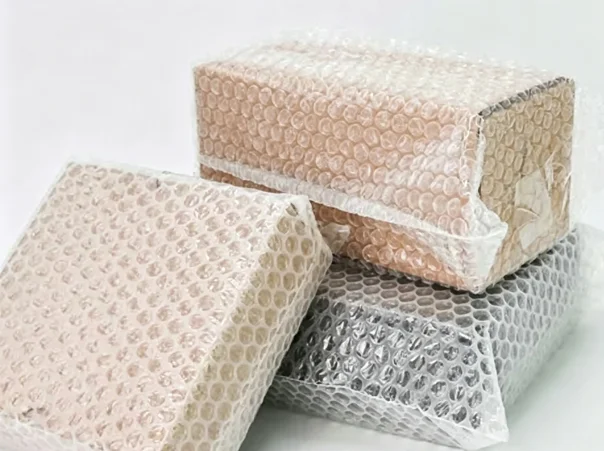
Anti-static bubble film is specially designed for packaging electronic components. It helps prevent static electricity damage and is widely used for circuit boards, computer parts, and precision instruments.
How anti-static bubble film works:
| Feature |
How It Works |
Benefit for Electronics |
| Anti-static additive |
Dissipates static charge slowly and controllably |
Prevents sudden discharge to components |
| Polyethylene base |
Maintains cushioning properties |
Protects against impacts and vibration |
| Static-dissipative range |
Engineered to 10⁹–10¹¹ ohms/sq |
Safe for direct component contact |
Anti-static bubble film is static-dissipative, not conductive. It allows static charges to flow to ground slowly enough to prevent damaging discharge.
When to Use Anti-Static Bubble Film
Anti-static bubble film is ideal for:
-
Shipping populated circuit boards between facilities
-
Packaging replacement components for field service locations
-
Protecting assembled electronic modules in transit
-
Wrapping delicate instruments with internal electronics
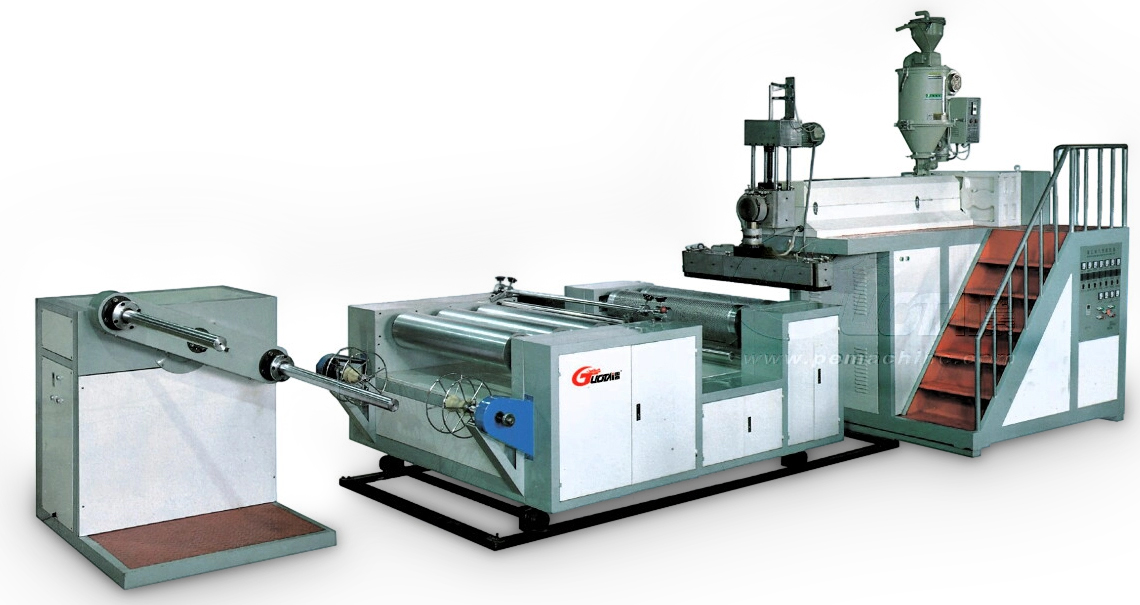
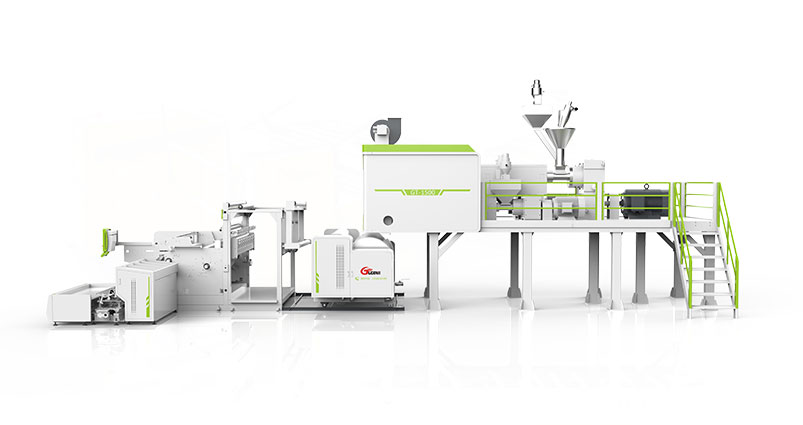
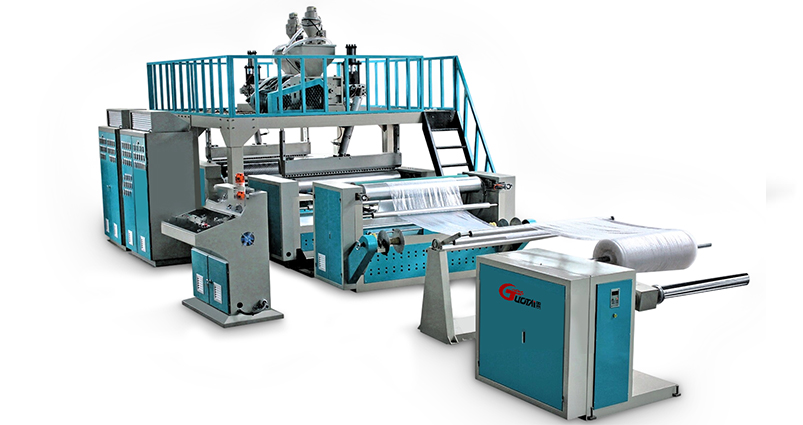
Modern bubble film machines can produce various types of bubble film, including anti-static varieties, through multi-layer co-extrusion technology.
Learn about multi-layer bubble film configurations for different protection requirements at→
Foam Packaging for Electronics Shipping: Types and Considerations
Foam packaging comes in many varieties, and not all offer ESD protection either. Understanding the differences is critical.
Standard Foam: The Risk
Standard polyethylene or polyurethane foam—the kind used for general cushioning—can generate static charges during handling and shipping. Like standard bubble wrap, it should not be used in direct contact with sensitive electronic components.
Anti-Static and Conductive Foam
ESD-safe foams are engineered with conductive or dissipative properties. These materials control static electricity by either dissipating, shielding, or preventing charge buildup altogether.
Types of ESD-safe foam:
-
Anti-static foam (pink/charcoal): Static-dissipative, safe for direct component contact
-
Conductive foam (black): Provides a Faraday cage effect for highly sensitive devices
-
ESD-safe polyurethane foam: Combines cushioning with static protection
A study on ESD protective packaging materials found that LDPE extruded foam cushion showed the highest virtual surface resistance among tested materials, followed by nylon/PE laminate, HDPE, and LDPE air-cell bubble wrap material.
When to Use ESD-Safe Foam
ESD-safe foam is particularly valuable for:
-
Shipping bare die or wafers (conductive foam required)
-
Protecting heavy or sharp-edged components that could puncture bubble film
-
Applications requiring rigid structural support during shipping
-
High-value components where maximum protection is justified
Head-to-Head Comparison: Anti-Static Bubble Film vs ESD-Safe Foam
Both materials can provide ESD protection when properly specified. The choice depends on your specific application requirements.
ESD Protection Performance
| Criteria |
Anti-Static Bubble Film |
ESD-Safe Foam |
| Static dissipation |
Controlled by anti-static additives |
Engineered dissipative or conductive properties |
| Surface resistivity |
10⁹–10¹¹ ohms/sq (dissipative) |
10⁹–10¹¹ (anti-static) or <10⁶ (conductive) |
| Compliance |
Meets ANSI/ESD S541 requirements |
Meets ANSI/ESD S541 requirements |
| Best for |
Light to medium components |
Heavy or sharp-edged components |
Physical Protection
| Criteria |
Anti-Static Bubble Film |
ESD-Safe Foam |
| Impact absorption |
Good (air bubbles provide cushioning) |
Excellent (dense foam absorbs energy) |
| Puncture resistance |
Moderate (multi-layer improves) |
High (dense structure resists penetration) |
| Compression resistance |
Moderate (bubbles can burst under heavy loads) |
Excellent (maintains shape under weight) |
| Vibration dampening |
Good |
Excellent |
Weight and Shipping Cost
| Criteria |
Anti-Static Bubble Film |
ESD-Safe Foam |
| Weight per volume |
Very low |
Moderate to high |
| Storage efficiency |
Folds flat |
Bulky, fixed shape |
| Dimensional weight impact |
Minimal |
Significant |
Cost Considerations
| Criteria |
Anti-Static Bubble Film |
ESD-Safe Foam |
| Material cost per unit |
Lower |
Higher |
| Shipping cost |
Lower (lighter weight) |
Higher (heavier, bulkier) |
| Storage cost |
Lower (collapsible) |
Higher (requires more space) |
Quick Selection Guide
Choose anti-static bubble film when:
-
Components are light to medium weight (under 5 lbs)
-
Shipping volumes are high (weight savings add up)
-
Storage space is limited
-
Components have no sharp edges that could puncture bubbles
-
Transit time is moderate (24-72 hours)
Choose ESD-safe foam when:
-
Components are heavy or have sharp edges
-
Maximum impact protection is required
-
Components are of extremely high value
-
Rigid structural support is needed during shipping
-
Vibration dampening is critical
Real-World Application Scenarios
Scenario 1: Contract Electronics Manufacturer Shipping PCBs
A contract manufacturer produces 5,000 populated PCBs weekly for an industrial control customer. Boards contain multiple microprocessors and CMOS ICs. They switched from standard packaging to anti-static bubble film and reduced field failure rates from 3% to below 0.5%.
Key factors: Medium-volume, high-value components. Anti-static bubble film provides sufficient ESD protection and cushioning at a lower weight and cost than foam.
Scenario 2: Semiconductor Supplier Shipping Bare Die
A semiconductor supplier ships bare die and wafers to assembly facilities. These components are extremely sensitive to both ESD and physical damage. They use conductive foam trays within sealed ESD bags.
Key factors: Maximum protection required. Conductive foam provides both ESD protection and rigid structural support for fragile die.
Scenario 3: E-commerce Electronics Reseller
An online retailer ships laptop batteries, hard drives, and memory modules to individual customers. Most components arrive from suppliers in anti-static bags but are repackaged for individual shipments. They adopted anti-static bubble film for wrapping all internal electronics.
Key factors: High-volume, moderate-value components. Anti-static bubble film balances protection with cost-effectiveness.
Sustainability Considerations
Sustainability is increasingly important in packaging decisions. Both materials present challenges.
Foam Packaging Challenges
Expanded polystyrene (EPS) foam recycling rates remain low. The U.S. generates 35.7 million tons of plastic waste and recycles only 8.7%. EPS is one of the highest single-use plastics with minimum recycling value—approximately 1% of EPS is recycled, with 99% accumulating in solid waste. EPS-based materials are responsible for 30% of total landfill waste.
Anti-Static Bubble Film Considerations
Anti-static bubble film is a multi-material composite (polyethylene with additives), which complicates recycling. However, its lightweight nature reduces transport emissions compared to foam. And because bubble film liners fold flat, they occupy less storage and landfill volume.
Emerging solutions: Some manufacturers now produce mono-material PE bubble film with anti-static additives, improving recyclability. Modern bubble film machines can produce films with reduced material waste—up to 15% reduction compared to conventional models.
Learn how different film production systems accommodate anti-static additive integration at→
Step-by-Step: How to Choose the Right ESD Packaging
Work through these five steps to determine the right packaging for your electronics shipments.
Step 1: Identify Your Component Sensitivity Level
| Sensitivity Level |
Typical Components |
Required Protection |
| Low (HBM > 2000V) |
Passive components, connectors |
Anti-static packaging recommended |
| Medium (HBM 500–2000V) |
Many ICs, transistors |
Anti-static packaging required |
| High (HBM < 500V) |
MOSFETs, CMOS, sensitive RF |
Anti-static + Faraday cage recommended |
Step 2: Assess Physical Protection Requirements
-
Light, flat components (PCBs, memory modules): Anti-static bubble film is usually sufficient
-
Heavy components (power supplies, transformers): Foam provides better support
-
Sharp-edged components (connectors, heat sinks): Foam resists puncture better
-
Fragile components (glass substrates, displays): Foam offers superior vibration dampening
Step 3: Evaluate Shipping Volume and Distance
-
High volume, short distance: Anti-static bubble film reduces weight and cost
-
Low volume, long distance: Foam provides maximum protection for valuable shipments
-
International shipping: Both materials work; consider weight for air freight costs
Step 4: Consider Storage and Handling
-
Limited warehouse space: Anti-static bubble film folds flat
-
Automated packing lines: Both materials can be integrated; bubble film is easier to handle
-
Manual packing: Both are straightforward; bubble film is lighter
Step 5: Verify Compliance Documentation
When sourcing ESD packaging, request:
-
Surface resistivity test reports (per ANSI/ESD STM11.11)
-
Static-decay time test reports
-
Material certification showing ESD properties
According to the ESD Association, packaging materials should be tested at 12% relative humidity and 23°C for accurate comparison.
Next Steps: From Comparison to Selection
Neither anti-static bubble film nor ESD-safe foam is universally "better." The right choice depends on your component sensitivity, physical protection requirements, shipping volumes, and cost constraints.
For light to medium-weight electronic components shipped in moderate volumes, anti-static bubble film offers an excellent balance of ESD protection, cushioning, weight savings, and cost-effectiveness. For heavy, sharp-edged, or extremely high-value components, ESD-safe foam provides superior physical protection and structural support.
Once you have identified your component sensitivity levels and typical shipping profiles, comparing specific material specifications becomes the next logical step. You can review high-performance anti-static bubble film configurations for sensitive electronics, or explore blown film systems for producing custom ESD-protective packaging in-house.
Learn how different film production lines accommodate anti-static additive integration for electronics-grade materials at→
Related Reading
-
Anti-Static Bubble Film for Electronics
-
What Types of Bubble Film Can a Bubble Wrap Machine Produce?
-
Bubble Wrap vs Foam Packaging: Which Protects Better for Food Shipping?
-
Understanding ANSI/ESD S20.20 for Packaging Suppliers
-
Latent ESD Failure: The Hidden Cost of Inadequate Packaging




 English
 Français
 Español