A production manager in Gujarat once told me, “My machine runs fine. Why would I need a Siemens PLC?” Three months later, a faulty temperature sensor took his line down for two full shifts. His standard control panel showed a generic error light. No one knew which sensor failed. They replaced seven components before finding the right one.
That’s the difference between standard bubble controls and a Siemens PLC system. Not features on a spec sheet. Hours of uptime. Minutes of troubleshooting—actual money in your pocket.
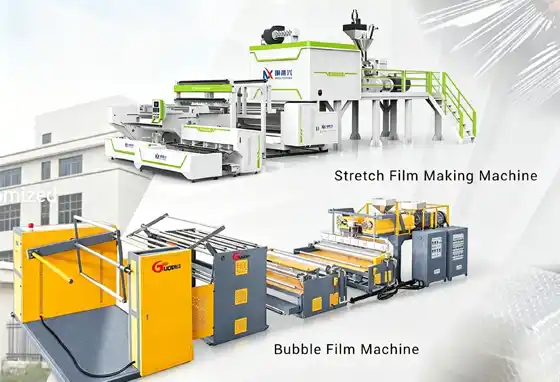
The Core Difference: Reactive vs Predictive Control
Standard control systems use relay logic. A temperature reading drifts outside range—the relay trips. The machine stops. You see a red light. That’s all.
A Siemens PLC (Programmable Logic Controller) processes the same data differently. It monitors multiple variables simultaneously. When temperature drifts, the PLC can:
-
Log the exact sensor reading at time of fault
-
Show historical trend data for that zone
-
Allows you to adjust parameters while running
-
Trigger predictive alerts before complete failure
According to a 2023 survey of 50 flexible packaging plants, lines with PLC-based automation averaged 34% less unplanned downtime compared to relay-controlled machines. The reason isn’t better components. It’s better information.
Comparison Table: Siemens PLC vs Standard Relay Controls
| Dimension |
Standard Relay Control |
Siemens PLC System |
| Fault diagnosis |
Generic error light |
Specific alarm with sensor ID and value |
| Parameter adjustment |
Requires a stopping line |
Real-time adjustment while running |
| Recipe storage |
None or limited to 1-2 |
Store hundreds of product recipes |
| Remote access |
Not possible |
Full remote monitoring and diagnostics |
| Data logging |
No historical record |
Continuous logging for ISO compliance |
| Average troubleshooting time |
45-90 minutes |
5-15 minutes |
| Operator training required |
Low (basic electrical) |
Moderate (HMI navigation) |
| Initial cost |
Lower |
20-35% premium |
Real-World Cost Difference: A 12-Month Calculation
Let me use actual numbers from a Malaysian packaging plant that upgraded from relay to Siemens PLC on their 3-layer bubble line.
Before (relay control):
-
Unplanned downtime: 14 hours/month
-
Troubleshooting labor: 2 technicians × 3 hours per event
-
Monthly lost production value: $8,400
-
Annual downtime cost: $100,800
After (Siemens PLC):
-
Unplanned downtime: 5 hours/month
-
Troubleshooting labor: 1 technician × 1 hour per event
-
Monthly lost production value: $3,000
-
Annual downtime cost: $36,000
Net annual savings from downtime alone: $64,800
The PLC upgrade cost $18,500. Payback period: 3.5 months. The plant manager told me, “I should have done this years ago.”
Where Standard Controls Hide Costs
Standard relay systems have three hidden cost drivers that don’t appear on the initial quote:
Hidden Cost #1: Component Swapping
Without diagnostic precision, operators replace parts, guessing which failed. A 40sensorbecomesa40sensorbecomesa400 repair when you also replace a relay, a heater band, and a wiring harness.
Hidden Cost #2: Temperature Drift Waste
Standard controls can’t log temperature history. When your melt temperature drifts 3°C over a shift, bubble thickness changes. You might not notice until 500kg of off-spec film is already wound. A Siemens PLC logs every degree. You catch drift in 5 minutes, not 5 hours.
Hidden Cost #3: Operator Dependency
Relay systems rely on experienced operators who “know the machine.” When that operator leaves or retires, tribal knowledge leaves with them. Siemens PLCs store parameters, alarms, and recovery procedures. A new operator follows the screen.
A Thai bubble film producer lost their senior operator to retirement. With relay controls, their efficiency dropped 22% over three months. They eventually upgraded to check detailed specifications with PLC integration. Efficiency returned to previous levels within two weeks.
Beyond Downtime: Production Flexibility
Standard controls work fine if you run the same bubble size, same width, same roll length, day after day. But most packaging lines today run mixed production.
With relay controls:
-
Change from 10mm to 20mm bubble? Manual adjustments across 6-8 points
-
Change film width? Recalibrate sensors manually
-
Record settings for next time? Paper notebook or memory
With Siemens PLC:
-
Select “Product Recipe 17” from the touchscreen
-
All zones, tensions, and speeds adjust automatically
-
Store up to 999 recipes with notes
Diagnostics That Actually Tell You What Failed
Let me give you a real example. A bubble line stops. The standard control panel shows “Heater Fault.” Which heater? There are 14 zones. An operator spends 30 minutes checking each heater with a multimeter.
Same failure on a Siemens PLC. The HMI screen shows: “Zone 7 heater output active, but thermocouple reading 25°C below setpoint. Check thermocouple connections.” A technician inspects the Zone 7 thermocouple. Finds a loose wire. Tightens it. Machine restarts in 8 minutes.
The difference is specific, actionable information versus guesswork.
Remote Support: The Overlooked Advantage
When your line stops at 2 AM, who do you call? With standard controls, you wait for your maintenance team to arrive. With a Siemens PLC, a technician can log in remotely from anywhere. They see live data. They check historical trends. They often diagnose the problem before walking onto the floor.
A Canadian bubble film producer avoided a 3-day shutdown when their annual maintenance uncovered a failing drive. Their Siemens PLC had logged intermittent voltage drops for weeks. The remote support technician identified the trend, ordered the replacement part, and scheduled installation during a planned weekend. The failure never caused unplanned downtime.
Standard controls would have run until the drive failed completely—midweek, mid-shift, mid-order.
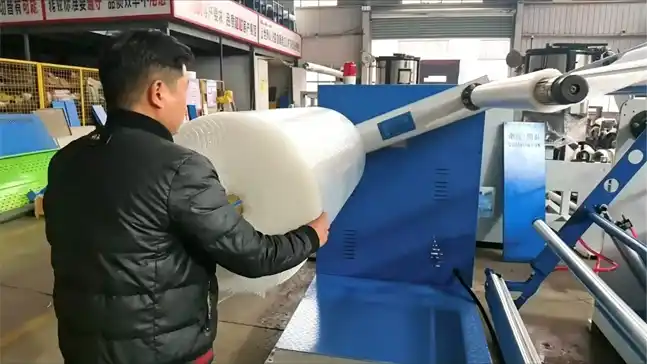
What You Actually Lose with Standard Controls
After comparing 30+ installations, here’s the honest summary:
You lose diagnostic speed. Finding problems takes 3-5x longer without PLC logging and specific alarm messaging.
You lose recipe consistency. Handwritten settings drift. Operators forget. Different shifts produce different quality.
You lose data for improvement. Without logged data, you can’t prove which changes improved efficiency or reduced waste.
You lose remote visibility. If you’re not on the floor, you don’t know if the line is running or stopped.
What you gain with standard controls: Lower upfront cost. That’s it. The trade-off is a higher operating cost starting month one.
Making the Right Call for Your Line
If you run one bubble size, one width, one operator shift, and downtime doesn’t hurt much, standard controls might be fine.
But if you:
-
Change specifications regularly
-
Track OEE or efficiency metrics
-
Have customers who demand quality documentation
-
Struggle with inconsistent operator performance
-
Want to scale production without adding headcount
Then a Siemens PLC system pays for itself within months, not years.
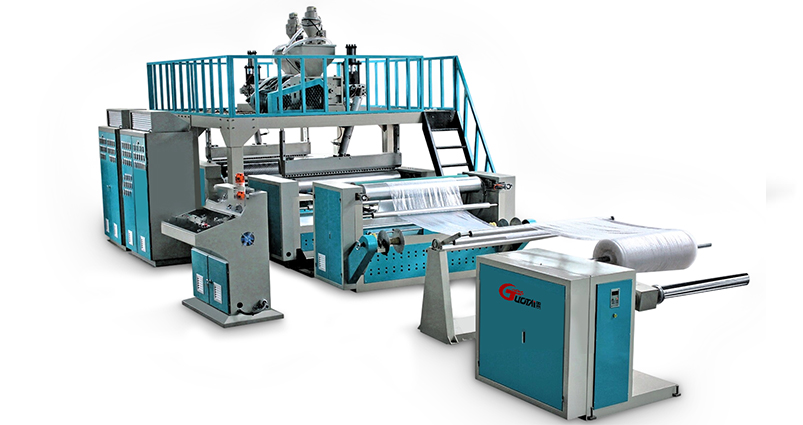
Review different Bubble Film Machine equipment configurations that include Siemens PLC integration.
Final Take
A bubble film line is an investment in production capacity. The control system determines how much of that capacity you actually use. Standard controls give you a machine. Siemens PLC gives you a machine plus data, diagnostics, and consistency.
The plant manager from Gujarat? After his two-shift downtime, he upgraded. Six months later, his words: “The PLC paid for itself in the first quarter. I’ll never buy a relay-controlled line again.”
That’s the difference between buying a machine and buying reliability.



 English
 Français
 Español