A production manager called me last month. His bubble line was running fine—until the film hit the customer’s packing table. Then bubbles popped. “The rolls look perfect coming off the winder,” he said. “So why are they failing in use?”
Here’s the hard truth: bubble bursting during use often starts at the machine. Not at the packing line. Not with handling. The defects are baked in during extrusion, cooling, or winding. They just don’t show up until the film is stretched or handled.
Let me walk you through the machine-level causes of bubble failure—and what to adjust on your line to fix them.
Machine Issue #1: Die Lip Temperature Inconsistency
The die lip is where the molten tube exits before inflation. If temperature varies across the lip width, you get uneven melt viscosity. Thinner areas become weak points that burst when the film is stretched during use.
What to check: Measure die lip temperature at five points across the width using an infrared thermometer. Variation should stay within ±3°C.
Common causes:
-
Failed or underpowered heating bands
-
Blocked cooling air paths near the die
-
Die body warped from uneven thermal expansion
Fix: Replace any heater band showing more than 5°C variation from setpoint. Clean debris from air ring cooling channels. If the die body is warped (visible when measuring flatness), it’s time for replacement.
A film producer in Ohio found a 12°C temperature drop at the left edge of their 1200mm die. The cause? A heater band that hadn’t been tightened properly after maintenance. Fix took 20 minutes. Burst rate in customer use dropped from 8% to 2%.
Machine Issue #2: Inconsistent Cooling Air Flow
Bubbles set (solidify) as they travel up the cooling tower. If cooling air is uneven or insufficient, the bubble wall solidifies at different rates. The result: thick and thin spots in the same bubble. Thin spots burst under normal handling.
What to check: Feel the bubble film at the top of the cooling tower. It should be uniformly cool to the touch across the entire circumference. Hot spots indicate insufficient or misdirected cooling.
Common causes:
-
Air ring tilted or not concentric with the bubble
-
Clogged air ring ports (dust buildup is common)
-
Cooling blower speed too low for line speed
Fix: Re-level the air ring using a bubble gauge. Clean all air ring ports with compressed air weekly. Match blower speed to line speed—typical ratio: 0.8-1.2 m³/min per 10 kg/hour output.
One manufacturer in Vietnam reduced bubble thickness variation from ±9% to ±4% simply by cleaning their air ring ports. The cleaning took 40 minutes. They now do it every 200 running hours.
Machine Issue #3: Damaged or Worn Air Ring
The air ring shapes the bubble by directing cooling air. Even minor damage—a dent, a scratch, or a misaligned lip—creates uneven cooling patterns.
What to check: Look for visible damage. Run your finger around the air ring exit lip. Any burr or irregularity will show up as a vertical line of weak bubbles on the finished film.
Fix options:
-
Minor burrs: Polish with fine-grit sandpaper (1000+ grit)
-
Small dents: Replace the damaged section if modular
-
Major damage: Replace the entire air ring
Prevention: Train operators to never rest tools or product on the air ring. It looks solid but aluminum rings deform easily. One dropped wrench can cause months of burst issues.
Machine Issue #4: Internal Bubble Pressure Fluctuations
Bubble diameter is controlled by internal air pressure—typically 5-18 mbar. If pressure fluctuates, the bubble expands and contracts. Each cycle strains the bubble walls, creating fatigue points that burst later.
What to check: Monitor your internal bubble pressure gauge for 10 minutes. It should hold steady within ±0.5 mbar. Larger swings indicate a leak or failing pressure controller.
Common causes:
-
Leaking air shaft seals (where air enters the bubble)
-
Failing pressure transducer (drifts over time)
-
Air line restrictions or blockages
Fix: Soap-test all air line connections. Replace shaft seals annually (they’re wear items). Calibrate pressure transducers every 6 months against a known reference.
A packaging plant in Poland chased burst issues for four months. They replaced resin, adjusted temperatures, even changed suppliers. The problem? A $12 O-ring on the air shaft that had a small nick. Air pressure was oscillating 2.5 mbar. New O-ring. Problem solved.
Machine Issue #5: Cooling Tower Height Mismatch
Shorter cooling towers force you to run slower or accept incompletely set bubbles. If the bubble film isn’t fully solidified before collapsing, the bubble walls stick to each other. When the film is later unwrapped, those stuck spots tear open.
What to check: Measure your cooling tower height. For outputs above 60 kg/hour, you need at least 2.5m from die lip to collapsing frame. For 100+ kg/hour, 3.5m minimum.
Common symptoms of insufficient tower height:
-
Bubbles feel tacky or sticky at the collapsing frame
-
Film makes a “snicking” sound as it separates at the winder
-
White residue (plastic dust) on collapsing frame rollers
Fix options:
-
If tower height is fixed: reduce line speed by 15-20% to allow more cooling time
-
If upgrading: add a tower extension (most modern lines allow this)
-
Alternative: add a secondary cooling ring at mid-tower height
A corrugated manufacturer in Texas ran their line at 55 m/min. Burst complaints were constant. They lowered speed to 42 m/min. Cooling time increased by 35 seconds. Burst complaints dropped 80%. Lost output? They added a second shift to compensate—still profitable.
Machine Issue #6: Collapsing Frame Misalignment
The collapsing frame flattens the round bubble into two layers of flat film. If the frame is misaligned or uneven, it creates pressure points. Those pressure points pinch bubbles, partially deflating them before they even reach the winder.
What to check: Run the line at low speed. Watch the bubble enter the collapsing frame. It should center naturally without being pushed left or right. The fold lines should be straight and parallel.
Fix: Adjust frame position so the bubble centers automatically. Most frames have adjustment screws or slotted mounting holes. Small movements (2-3mm) make big differences.
Prevention: Check frame alignment every time you change bubble diameter. Different bubble sizes center differently in the same frame.
Machine Issue #7: Winder Tension Spikes
The winder applies tension to pull film through the line. If tension spikes—even briefly—it stretches the bubble film. Stretched bubbles have thinner walls that burst easily during customer use.
What to check: Look at your winder’s tension log (if available). Watch for spikes during roll starts, stops, or diameter changes. No data logger? Run your hand across the finished roll. Inconsistent roll hardness indicates tension variation.
Common causes:
-
Dancer arm bearings sticking
-
Taper tension profile incorrectly set
-
Roll diameter sensor drift
Fix: Clean and lubricate dancer arm bearings monthly. Set taper tension to reduce tension by 30-40% from core to full roll diameter. Calibrate roll diameter sensors every 3 months.
A flexible packaging plant in Illinois found tension spikes of +50% every time their winder started a new roll. The cause? A sticky dancer arm bearing. Replacement cost: $45. Burst rate dropped from 5.5% to 1.8% in one week.
Machine Issue #8: Die Lip Contamination
This is the most common—and most overlooked—machine issue. Carbonized resin builds up on the die lip over time. Each buildup spot creates a thin line in the melt curtain. Those thin lines become rows of weak bubbles.
What to check: Stop the line. Use a flashlight to inspect the die lip surface. Look for dark brown or black deposits. Even 0.2mm of buildup is enough to cause defects.
Cleaning procedure:
-
Reduce temperature by 30°C (makes carbon brittle)
-
Use a brass scraper (never steel—steel scratches the lip)
-
Scrape gently along the lip direction
-
Wipe with a soft cotton cloth
-
Bring temperature back to normal
Cleaning frequency:
-
LDPE only: every 400-500 hours
-
With recycled content: every 200-300 hours
-
With additives (slip, antiblock): every 150-200 hours
One producer of agricultural bubble film cleaned their die lip every 600 hours. Burst rates were 7%. They switched to every 250 hours. Burst rates dropped to 2.2%. The extra cleaning took 45 minutes per week. The savings in customer complaints and returns: $18,000 annually.
Machine Troubleshooting Quick Reference
| Symptom on Finished Film |
Most Likely Machine Cause |
Check First |
| Random burst spots across width |
Die lip contamination |
Inspect die lip visually |
| Burst pattern repeats every roll length |
Die lip scratch or burr |
Run finger around lip |
| Bursts only on one edge of roll |
Uneven die temperature |
IR thermometer across lip |
| Bubbles stick together on roll |
Cooling tower height or airflow |
Check bubble tackiness at frame |
| Intermittent weak bubbles (no pattern) |
Pressure fluctuation |
Monitor IBC pressure gauge |
| Bursts worse after roll change |
Winder tension spike |
Check dancer arm bearings |
| Consistent weak vertical line |
Air ring damage |
Inspect air ring lip |
Prevention Schedule for Machine-Related Burst Issues
Set a weekly checklist for your production team:
| Task |
Frequency |
Time Required |
| Clean die lip |
150-500 hours (see above) |
30-45 minutes |
| Check the lip temperature uniformity |
Weekly |
10 minutes |
| Clean air ring ports |
Weekly |
20 minutes |
| Inspect air ring for damage |
Monthly |
5 minutes |
| Test internal pressure system for leaks |
Monthly |
15 minutes |
| Check collapsing frame alignment |
Per size change |
10 minutes |
| Lubricate dancer arm bearings |
Monthly |
10 minutes |
| Verify taper tension profile |
Quarterly |
20 minutes |
Print this table. Post it on your line. Sign off on each task. The plants that follow this schedule have burst rates under 1.5%. The ones that don’t? They call me asking why their customers are complaining.
From Machine Fixes to Production Confidence
Machine-related bubble bursting isn’t mysterious. It has specific causes: die lip contamination, uneven cooling, pressure leaks, misaligned frames, tension spikes. Each has a fix. Each fix takes less than an hour for most issues.
The difference between frustrated producers and reliable ones? Systematic checks. Not guessing. Not “we’ve always done it this way.” Measuring, adjusting, verifying.
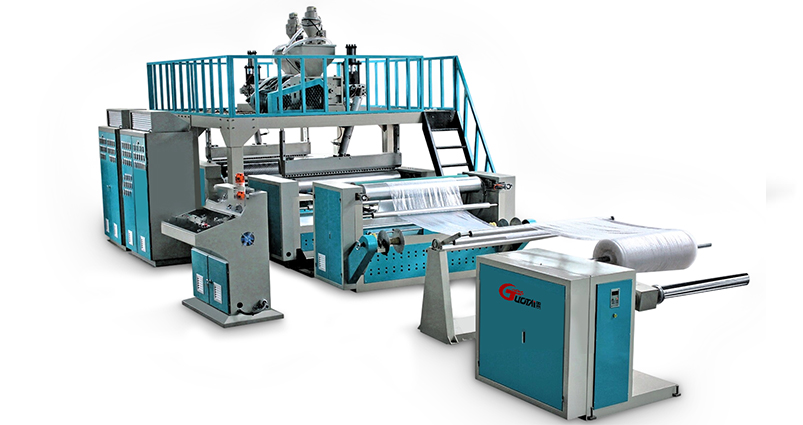
If you’re producing bubble film and seeing burst complaints, work through this list. You’ll find the cause. And when you do, review different Bubble Film Machine equipment specifications to understand how modern lines prevent these issues with better temperature control, sealed pressure systems, and automated tension management.
Final Take
Your machine is either the solution or the problem. Most burst issues trace back to one of the eight causes above. Die lip contamination tops the list. Cooling issues come second. Everything else is less common but still real.
Run through the checklist. Clean what needs cleaning. Adjust what needs adjusting. Replace worn parts before they cause complaints. Your customers aren’t asking for perfect film. They’re asking for film that works predictably, every time.
What’s the one machine check you’ve been putting off? That’s probably where your burst problem lives.



 English
 Français
 Español