An e-commerce operations director once told me: “We spend 0.30 on bubble wrap shipment, but 0.30 on bubble wrap shipment, but 12 on return shipping when it fails.” His math was brutal. The cheap film he’d chosen wasn’t saving money. It was costing him 40x more in reverse logistics.
Here’s the reality most online sellers discover too late: not all bubble film stops damage. The film that works for palletized freight often fails for individual parcels tossed into delivery vans. The film that protects books crushes under the weight of cast iron cookware.
So what actually works for e-commerce shipping protection? Let me walk you through the science of bubble selection—not marketing claims, but material behavior under real delivery conditions.
The Three Failure Modes in Parcel Shipping
Standard bubble film fails in three predictable ways when used for e-commerce fulfillment. Understanding these helps you choose—or produce—the right material.
Failure Mode #1: Bottoming Out
The product weight fully compresses the bubbles, leaving no air cushion. The bubble film becomes a thin plastic sheet. Impact transfers directly to the product.
Failure Mode #2: Point Loading
Sharp corners (electronics, hardware, tools) puncture individual bubbles. Once one bubble bursts, adjacent bubbles lose structural support. Chain failure follows.
Failure Mode #3: Vibration Migration
During truck transport, constant vibration shifts the product inside the carton. The bubble film that started between product and box ends up on one side. Protection disappears.
A 2023 study by the Safe Transit Association analyzing 10,000 e-commerce shipments found that 62% of in-transit damage occurred from drops under 60cm. Not warehouse falls. Simple handling drops. The film failed not because the drop was high, but because the cushioning wasn’t matched to product weight.
Bubble Geometry That Actually Protects
Most e-commerce sellers think bigger bubbles mean better protection. Wrong. The optimal bubble size depends entirely on your product’s weight per contact point.
| Product Type |
Typical Weight Per Contact Point |
Recommended Bubble Diameter |
| Books, documents |
0.1-0.3 kg |
6-8 mm |
| Clothing, soft goods |
0.2-0.5 kg |
8-10 mm |
| Small electronics |
0.5-1.0 kg |
10-12 mm |
| Kitchenware, tools |
1.0-2.5 kg |
6-8 mm (multiple layers) |
| Heavy parts (>3 kg) |
2.5-5.0 kg |
Use air pillows + bubble |
Notice that heavy, dense products need smaller bubbles—not larger. More bubbles per square inch means more contact points sharing the load. A 20mm bubble under a 2kg corner bursts instantly. Twelve 8mm bubbles under the same corner distribute the force.
An online cookware seller switched from 25mm to 10mm bubble film. Their damage rate dropped 54% in three months. The larger bubbles had been bursting under cast iron pan corners. Smaller bubbles flexed without breaking.
[Image: Comparison of 25mm bubble compressed under weight vs 10mm bubbles distributing load across multiple contact points]
Matching Machine Capability to E-Commerce Demand
For e-commerce brands scaling rapidly, producing bubble film in-house becomes a strategic advantage. But not every production line delivers the efficiency and flexibility required for diverse shipping volumes.
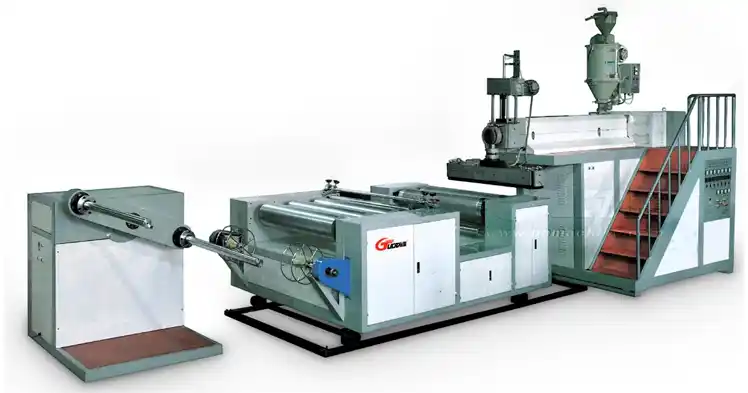
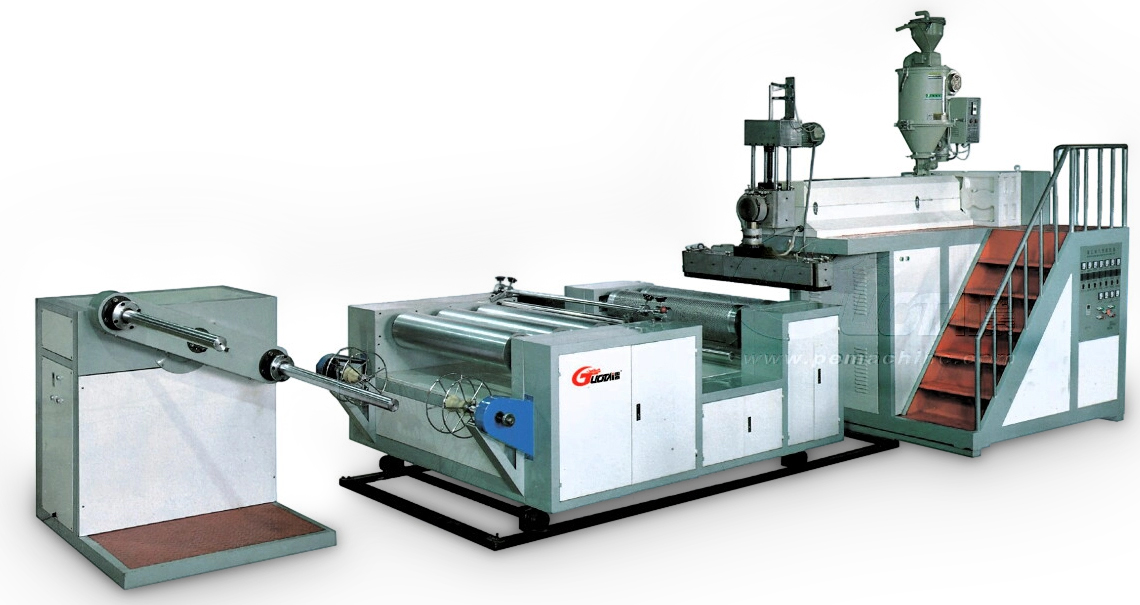
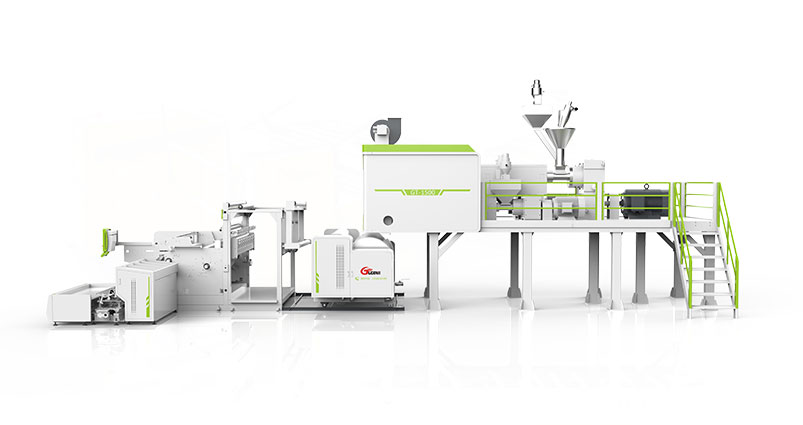
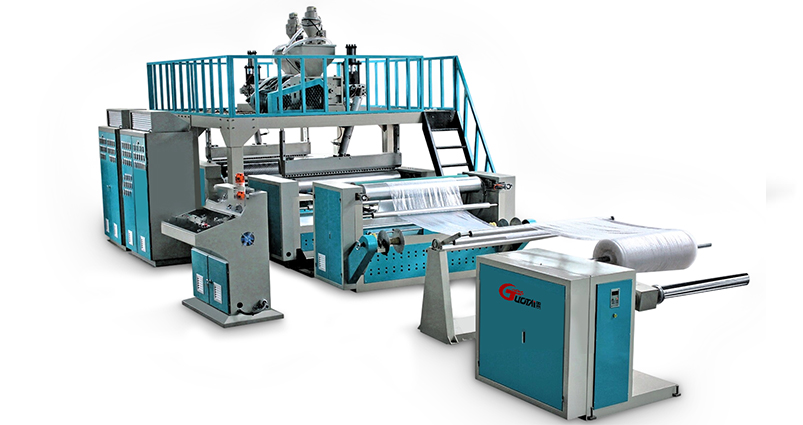
The check different Bubble Film Machine Models production specifications of Guotai’s PE Bubble Film Machine line show how industrial equipment addresses e-commerce pain points:
-
1100 meters/hour output – For high-volume shippers, this speed ensures on-demand production keeps pace with peak season orders. No more rush charges for last-minute film purchases.
-
6-30mm adjustable bubble diameter – This range covers the entire e-commerce spectrum: 6-8mm for heavy cookware, 10-12mm for electronics, 15-20mm for lightweight apparel.
-
30% energy reduction – At 7.2kW/kg consumption, a mid-volume operation can save €45,000 annually in electricity—directly improving per-shipment packaging cost.
-
Dual-mode production – Switch between standard and composite film (EVA/POE) without stopping. Fresh produce needs FDA-compliant layers; industrial parts need heavy-duty cushioning. One machine handles both.
A cosmetics shipper processing 8,000 daily orders calculated their break-even on in-house production at 14 months. After switching to a line with similar specs, their material cost dropped 44%, and damage rates fell because they could now match bubble geometry per product.
[Image: High-speed PE bubble film production line showing output roll and control panel]
Layer Count: Single vs Double vs Triple Bubble
E-commerce shipping demands different layer configurations than industrial pallet wrapping. The Guotai PE Bubble Film Machine produces 2-layer co-extruded film machine, which offers:
Where the 2-layer excels in e-commerce:
-
Items 0.5-2kg (most standard shipments)
-
Moderate drop heights (30-60cm)
-
High-volume operations needing consistent output
For heavier or more fragile items: Dual-layer film can be wrapped multiple times, or the machine’s adjustable bubble diameter (down to 6mm) provides higher bubble density per square inch—effectively creating progressive cushioning through smaller contact points.
A vitamin company shipping glass bottles tested single-layer purchased film (11% breakage) against their own 2-layer 10mm bubble produced in-house (3% breakage). The switch paid for itself in 90 days from reduced replacements.
Anti-Static: Not Optional for Electronics
Standard bubble film generates static electricity as it unwinds and rubs against products. For electronics, that static discharge can damage sensitive components—without visible signs until the customer powers on a dead device.
When you must use an anti-static bubble:
-
Circuit boards, computer components
-
Medical devices with electronics
-
Automotive sensors
-
Any product with exposed connectors
If you’re producing your own film, ask about adding permanent antistat to the resin blend. The cost premium is 15-25%. The cost of not using it? Customer returns you can’t resell.
One smartphone accessory seller saw “dead on arrival” rates drop 78% after switching to anti-static bubble. The components weren’t breaking from drops. They were frying from static during packing.
[Image: Anti-static bubble film being used to wrap electronic circuit board assembly]
Sealing Strength: The Overlooked Variable
Bubble film fails at the seals as often as the bubbles themselves. Weak seals leak air. Flat bubbles offer zero protection.
What to check in your production process:
-
Seal width: Minimum 8mm for e-commerce wraps
-
Seal pattern: Diamond or cross-hatch holds better than a straight line
-
Heat seal temperature control: PID systems maintain consistency
The PE Bubble Film Machine uses intelligent PID temperature control on its heating zones. This isn’t a minor feature. Consistent temperature = consistent seal strength. A furniture manufacturer reduced in-transit damage 41% after switching to film from a line with precise thermal management. No other variable changed.
Sustainability Expectations Are Changing
Major e-commerce platforms are pushing suppliers to reduce plastic. Amazon’s “Frustration-Free Packaging” initiative requires recyclable cushioning. Etsy prohibits expanded polystyrene. Walmart’s Project Gigaton includes packaging reductions.
What this means for in-house bubble production:
-
Use recycled content: 30-50% post-industrial recycled resin is feasible
-
Thin down film: Better bubble engineering (like 2-layer co-extrusion) allows thinner gauges without losing protection—down to 45µm from 70µm
-
Mono-material construction: 2-layer all-PE film is recyclable in existing streams
One European e-commerce brand reduced its bubble film thickness from 70µm to 45µm while maintaining protection by optimizing bubble height and layer bonding on its production line. Less plastic, same performance, better sustainability rating.
Real-World Testing Protocol for E-Commerce
Before committing to any bubble film for shipping protection—whether purchased or self-produced—run this simple test:
-
Pack 20 identical products with your candidate film
-
Drop from 60cm (standard parcel handling height) onto concrete—flat, on edge, on corner
-
Drop from 90cm (warehouse stacking height)
-
Shake in a box on a vibrating table for 30 minutes (simulates truck transport)
-
Open and inspect
Pass criteria: No product damage, less than 10% bubble burst, no seal failures.
A pet supply company tested five bubble films this way. The cheapest failed vibration—products shifted and collided. The most expensive failed corner drops. Only one film passed all three. They bought that one. Damage claims dropped 67%.
If you’re producing your own film, run this test quarterly. Track performance by production batch. explore different Bubble Film Machine technical specifications for equipment that includes automated quality monitoring of bubble formation and seal integrity.
Calculating Your In-House Production Break-Even
Fast-growing e-commerce brands eventually face a choice: keep buying pre-made rolls, or produce their own film.
Example calculation using 1100 m/hour output machine:
| Monthly Usage (rolls) |
Pre-Made Cost per Roll |
In-House Cost per Roll |
Monthly Savings |
Break-Even (Equipment ~€45,000) |
| 200 rolls |
€18 |
€9 |
€1,800 |
25 months |
| 500 rolls |
€16 |
€8 |
€4,000 |
11.5 months |
| 1,000 rolls |
€14 |
€7.50 |
€6,500 |
7 months |
Assumes 8 hours daily operation, €0.15/kWh electricity, and operator cost included. Your numbers will vary by local energy rates and labor costs.
A mid-size electronics shipper producing 500 rolls monthly achieved break-even at month 10. They also gained control over bubble diameter (switching between 8mm for cables and 12mm for routers instantly) and eliminated stockout emergencies.
The Bottom Line for E-Commerce Operations
Shipping protection isn’t about spending more on film. It’s about matching film properties to your specific products—and controlling production to scale cost-effectively.
The PE Bubble Film Machine line addresses e-commerce needs through:
-
1100 m/hour speed for peak demand
-
6-30mm adjustable bubbles for product mix
-
2-layer co-extrusion for strength + cushioning
-
30% energy savings for better margins
-
CE & ISO certification for global compliance
If you’re scaling e-commerce fulfillment beyond 200 rolls monthly, in-house production stops being an option and starts being a competitive necessity.
Final Take
The difference between bubble film that works and film that fails isn’t a mystery. It’s engineering. Match bubble diameter to product weight. Use consistent sealing. Control static when needed. Test before you commit.
Your customers don’t care what you spent on packaging. They care that their order arrives intact. That’s the only metric that matters.
What’s your current damage rate from shipping? If it’s above 2%, your bubble film is lying to you. And if you’re buying pre-made rolls at 500+ monthly, the calculator above already knows your next step.



 English
 Français
 Español