You start a production run. Everything looks normal. But as the bubble film rolls off the line, you notice it: some bubbles are larger than others. The film thickness varies across the width. In some spots, the film is paper-thin; in others, it is too thick. The scrap rate is climbing, and you cannot figure out why.
Uneven bubble thickness is one of the most common—and frustrating—problems in bubble film extrusion. It wastes material, reduces product quality, and damages customer confidence. But here is the good news: most thickness variation issues can be traced back to a handful of root causes. This guide walks you through each one, explains how to diagnose the problem, and provides practical solutions to get your production back on track.
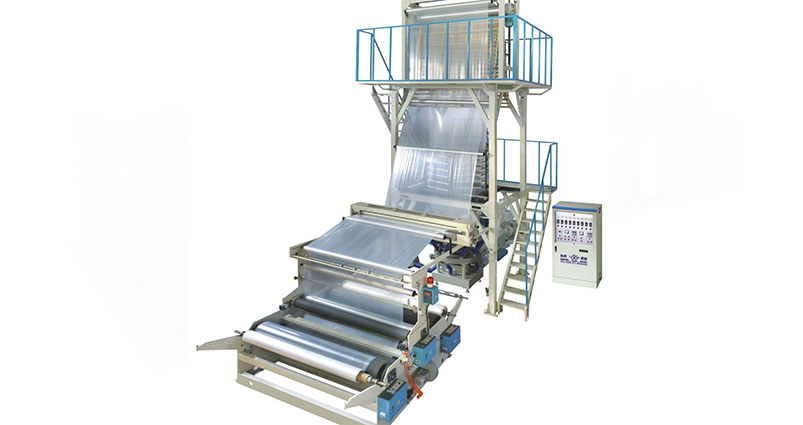
Why Thickness Uniformity Matters
Before diving into troubleshooting, it is worth understanding why thickness uniformity is so critical to bubble film quality.
The Cost of Inconsistent Thickness
When bubble film thickness varies across the web or along the length of the roll, several problems emerge:
-
Reduced cushioning performance: Thin spots provide less protection, increasing the risk of product damage during shipping
-
Material waste: Over-thick sections use more resin than necessary, driving up raw material costs
-
Increased scrap rate: Films that fall outside spec must be discarded or reground
-
Customer complaints: Inconsistent rolls perform unpredictably in downstream converting operations
According to industry analysis, uneven thickness can lead to 8–12% thickness over-tolerance loss per ton of raw material. For a high-volume producer, that translates into high annual cost.
What “Uniform” Looks Like
In a well-tuned bubble film extrusion line, thickness tolerance can be maintained within ±2% across the web. For multi-layer co-extrusion systems with advanced closed-loop control, thickness variation can be held to even tighter limits. When your film consistently meets these tolerances, you get predictable cushioning performance, minimal scrap, and satisfied customers.
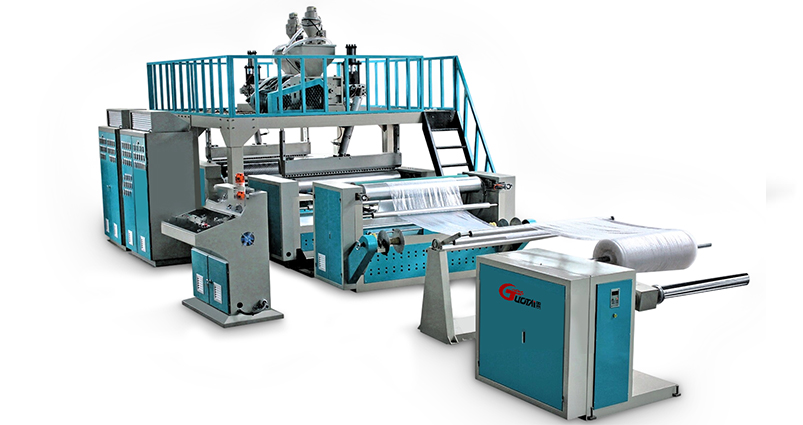
Learn about bubble film machine configurations designed for consistent thickness control.
Root Cause #1: Raw Material Issues
The quality of your bubble film starts with the quality of your resin. Raw material problems are a leading cause of uneven thickness.
Inconsistent Resin Properties
Resin raw materials from different batches or suppliers can have varying properties—melt index, density, and additive packages. When you mix resins with different melt flow characteristics, the extrusion process becomes unstable. Low melt index materials plasticize slowly, potentially causing thick spots and uneven bubble formation. High melt index materials flow too easily, leading to thin areas.
Solution: Use resin raw materials from the same manufacturer and batch whenever possible. Maintain consistent material specifications and document each batch‘s properties.
Moisture Contamination
Resin pellets can absorb moisture during storage. When moisture-laden resin is extruded at high temperatures, the water rapidly vaporizes, creating irregular gas pockets that produce bubbles of varying sizes. This effect is particularly pronounced with recycled materials, which tend to have higher moisture content.
Solution: Store resin in a dry environment. Use drying equipment to remove moisture before feeding material into the extruder. For recycled materials, consider additional drying time or dedicated drying hoppers.
Inconsistent Material Blends
If you are blending virgin and recycled resin, inconsistent mixing can cause localized variations in melt viscosity. The extruder may receive a slug of high-viscosity material followed by low-viscosity material, creating thickness fluctuations.
Solution: Use gravimetric feeding systems to ensure consistent material ratios. Blend materials thoroughly before feeding, or use in-line mixing systems that homogenize the melt before it reaches the die.
Root Cause #2: Temperature Control Problems
Temperature is the single most important variable in extrusion. Even small fluctuations can cause significant thickness variation.
Temperature Too High
When extrusion temperature is too high, the resin becomes overly fluid. Bubbles may break or merge during the molding process, resulting in uneven bubble sizes. Excessive temperature can also cause material degradation, producing gas bubbles within the film itself.
Solution: Reduce the temperature setting of each extrusion zone, paying particular attention to the die head area. Monitor the plasticization closely and adjust gradually.
Temperature Too Low
When temperature is too low, the resin does not fully plasticize. Bubble formation becomes difficult, and film thickness becomes unstable. The film surface may appear rough, and bubbles will vary in size.
Solution: Increase barrel and die temperatures incrementally until full plasticization is achieved. Watch for the melt to flow smoothly and uniformly from the die.
Uneven Temperature Distribution
Temperature gradients across the barrel or die can cause melt flow velocity differences. If one side of the die is hotter than the other, the melt will flow faster on the hot side, creating a thickness gradient across the film width.
Solution: Check for faulty heating elements and replace them. Ensure circumferential die temperature variation is kept below 5°C. Modern machines with zone PID dynamic compensation technology can maintain temperature fluctuations within ±1.5°C from feed section to die head.
Root Cause #3: Pressure and Flow Instability
Extrusion pressure directly affects how much resin reaches the die—and how uniformly it is distributed.
Unstable Extrusion Pressure
Fluctuations in extrusion pressure alter the resin flow rate. If pressure is too high, bubbles may be flattened and become smaller. If pressure is too low, resin will not extrude smoothly, resulting in inconsistent film thickness.
Solution: Install a pressure control system with automatic adjustment capabilities. Maintain stable melt pressure within a tight tolerance—±0.5% is achievable with well-maintained equipment.
Screw Speed Fluctuations
Unstable screw speed leads to unstable material delivery, which directly causes changes in film thickness. This is often due to drive motor issues or worn transmission components.
Solution: Check the drive motor and transmission system. Ensure the motor runs smoothly and transmission parts are not loose or worn. Regular calibration of the extrusion system is essential.
Melt Pump Integration
For critical thickness control applications, consider equipment with melt gear pumps. These pumps smooth out pressure fluctuations from the extruder and deliver a consistent melt flow to the die. Systems with melt pumps can suppress pressure pulsations to within ±0.3MPa, reducing sudden thickness changes by up to 67%.
Root Cause #4: Mechanical Wear and Equipment Condition
Over time, mechanical components wear and lose precision. This is a common but often overlooked cause of thickness variation.
Die Head Wear
After prolonged use, the die‘s flow channels and die lip can wear, resulting in uneven resin extrusion. Die lip wear is particularly problematic—it can cause film edge thickness to differ from the middle.
Solution: Regularly inspect the die for wear. Repair or replace worn parts in a timely manner. For critical applications, consider dies with replaceable lip inserts.
Roller Issues
Pressure rollers and traction rollers can develop uneven surfaces, wear, or become inflexible. Uneven rollers apply uneven force to the film, causing thickness changes. Inflexible rollers affect traction speed and stability.
Solution: Check roller surface quality and rotation smoothness. Polish and repair uneven rollers; replace rollers with severe wear or abnormal rotation. Perform regular lubrication and maintenance.
Die Gap Misalignment
The die gap must be precisely uniform around the entire circumference. Even small variations—0.02mm or less—can cause measurable thickness differences.
Solution: Adjust die gap screws to maintain uniform clearance. Use feeler gauges or precision measurement tools to verify gap consistency.
Root Cause #5: Cooling and Air Ring Issues
Cooling is critical to bubble stability and thickness uniformity.
Uneven Air Ring Cooling
The air ring cools the molten bubble as it emerges from the die. If airflow is uneven around the circumference, cooling will be asymmetric. The bubble will cool faster on one side, creating thickness variations.
Solution: Check the air ring alignment—ensure it is centered on the die. Adjust air ring wind volume: more air for thick spots, less for thin spots. For advanced systems, automatic air rings can dynamically adjust cooling rates at various angles in real time.
Frost Line Instability
The frost line—the point where the molten film solidifies—should appear as a level, straight line around the bubble. An uneven frost line indicates non-uniform cooling or uneven film gauge.
Solution: Observe the frost line during production. If it is cocked or uneven, adjust cooling air distribution and die temperature uniformity.
Bubble Instability
Bubble swaying, collapsing, or uneven expansion directly causes thickness variation. This can be caused by air ring issues, temperature variations, or mechanical misalignment.
Solution: Adjust the air ring position first—start from the bottom to stabilize the bubble. Check that the air ring and die head are properly aligned. For severe instability, reduce the blow-up ratio (BUR) temporarily and gradually increase it as stability returns.
Step-by-Step Diagnostic Checklist
When you encounter uneven bubble thickness, work through this systematic checklist:
Step 1: Inspect the Raw Material
-
Is the resin from a consistent batch and supplier?
-
Has the material been properly dried?
-
Are blend ratios consistent?
Step 2: Check Temperature Settings
-
Are all barrel zones at the correct temperature?
-
Is die temperature uniform around the circumference (variation <5°C)?
-
Is the melt temperature stable (±1.5°C)?
Step 3: Verify Pressure and Speed
Step 4: Inspect Mechanical Components
-
Is the die lip clean and uniform (gap ≤0.02mm)?
-
Are rollers smooth and rotating freely?
-
Are there signs of wear on the die or screw?
Step 5: Evaluate Cooling System
-
Is the air ring centered on the die?
-
Is airflow balanced around the circumference?
-
Is the frost line straight and level?
Step 6: Review Process Parameters
-
Is the blow-up ratio (BUR) appropriate for the material?
-
Is the take-off speed matched to output?
-
Are all parameters within the machine‘s recommended range?
Advanced Solutions for Consistent Thickness Control
For producers seeking to minimize thickness variation and maximize efficiency, modern bubble film machines offer several advanced technologies.
Closed-Loop Thickness Control
Modern systems integrate automatic die lip adjustment mechanisms combined with real-time thickness measurement using infrared or laser sensors. During bubble expansion, continuous monitoring allows micro-adjustments of the die gap to correct any deviation in film thickness. This helps maintain tight thickness tolerances—typically within ±2% across the web.
Multi-Zone Temperature Control
Advanced machines feature 40-point temperature control loops on 7-layer high-speed models, ensuring temperature fluctuations are kept within ±1.5°C from feed section to die head. This level of thermal precision is essential for consistent melt viscosity and stable bubble formation.
Precision Die Design
High-precision T-die designs incorporate zone-independent heating bolt adjustment systems that can compensate for thermodynamic differences in melt flow. Combined with multi-point online thickness detection and closed-loop control systems, die lip opening can be controlled at the micron level. Optimized flow channel design reduces residence time differences in the die cavity, minimizing transverse thickness fluctuations.
Melt Pressure Stabilization
Melt pressure stabilization systems help reduce fluctuations caused by pump variation. When combined with gravimetric feeding systems that ensure consistent raw material ratios, these controls reduce process variation and improve production stability.
Explore blown film machine configurations with advanced thickness control capabilities.
Real-World Troubleshooting Scenarios
Scenario 1: Thick and Thin Bands Across the Web
Symptoms: The film shows periodic thickness variations—thick bands followed by thin bands—across the width.
Diagnosis: This is typically caused by gauge bands arising from extrusion process inconsistencies or die design flaws. Common causes include die lip non-uniformity, temperature fluctuations, or screw surging.
Solution: Check die gap uniformity (target: ≤0.02mm variation). Verify temperature uniformity around the die circumference (target: <5°C variation). Inspect the screw for wear or surging issues.
Scenario 2: Consistent Thickness Variation from One Side to the Other
Symptoms: One edge of the film is consistently thicker or thinner than the other.
Diagnosis: This indicates asymmetric conditions—uneven die temperature, misaligned air ring, or non-uniform die gap.
Solution: Check that the air ring is centered on the die. Verify die temperature is uniform around the circumference. Measure die gap at multiple points and adjust to achieve uniformity.
Scenario 3: Random Thickness Spikes
Symptoms: Thickness varies randomly, with sudden spikes or drops.
Diagnosis: This points to intermittent issues—screw speed fluctuations, material inconsistencies, or moisture problems.
Solution: Check drive motor stability. Verify material consistency and dryness. Inspect for any mechanical binding or wear that could cause intermittent flow changes.
Scenario 4: Thickness Variation Correlated with Production Speed Changes
Symptoms: Thickness changes when production speed is increased or decreased.
Diagnosis: The machine‘s control system is not maintaining parameter stability across the operating range. Traction speed may not be properly synchronized with extrusion output.
Solution: Verify that the haul-off speed matches extruder output precisely. Check that all control loops are properly tuned for the full speed range.
Preventive Maintenance for Consistent Thickness
The best way to avoid thickness variation is to prevent it from happening in the first place.
Daily Checks
-
Verify temperature readings against setpoints
-
Inspect film for visual defects
-
Check material feed for consistency
Weekly Checks
-
Clean the die and air ring
-
Inspect rollers for wear or damage
-
Verify screw speed stability
Monthly Checks
-
Measure die gap uniformity
-
Calibrate temperature sensors
-
Check drive system alignment
Quarterly Checks
-
Inspect screw and barrel for wear
-
Service gearbox and drive components
-
Verify all control system calibrations
Next Steps: From Diagnosis to Resolution
Uneven bubble thickness is a solvable problem. By systematically working through the root causes—raw materials, temperature control, pressure stability, mechanical condition, and cooling systems—you can identify the source of the issue and take corrective action.
If you are experiencing thickness variation, start with the basics:
-
Verify material quality and dryness
-
Check temperature uniformity
-
Inspect die gap and condition
-
Confirm air ring alignment
For persistent issues, consider:
-
Upgrading to closed-loop thickness control systems
-
Implementing melt pressure stabilization
-
Investing in precision die technology
Once you have identified the specific cause of your thickness variation, comparing the technical specifications of available control systems becomes the next logical step. You can review machine configurations with advanced thickness control features, or explore blown film systems designed for high-precision film production.
Related Reading
-
Extrusion Temperature Profiling: How to Set Zones for Stable Bubble Formation
-
Air Ring Design and Maintenance for Uniform Bubble Cooling
-
Screw and Barrel Wear: Signs, Measurement, and Replacement Timing
-
Moisture Control in Recycled Resin for Bubble Film Extrusion
-
Integrating Automatic Gauge Control (AGC) in Bubble Film Lines



 English
 Français
 Español